What Is the Earliest a Baby Has Survived Outside the Womb
If information technology were to become a reality, the gestation of the unborn infant outside of the body (known equally ectogenesis), in artificial wombs, could truly shape the development of humanity. Still, this engineering has also sparked fierce ethical-legal fence beyond the globe. Every bit the prospect of ex-utero gestation draws always closer, placing social constructs and deciding what is acceptable and desirable in this context has never been more important.
A game changer
Imagine a globe where it's possible to produce children without placing any burden on women — an empowered club where the challenges and health-related risks associated with pregnancy and childbirth have been rendered obsolete. A brave new earth devoid of the obstacles to career advancement that women currently confront to gestate and give birth to children. Already within the homo race'due south grasp, the ex-utero borderland would render lifestyle behaviors needed to support a healthy pregnancy obsolete, galvanizing gender equality between every denomination and sexuality.
This state of affairs is what the consummate gestation of unborn progeny from conception to term exterior of the body, otherwise known equally full ectogenesis, could proffer. Simply, at present, there are many legal restrictions on embryonic research that impede the development of this technology. Meaning, researchers take full-bodied on fractional ectogenesis comprising bogus wombs which develop the fetus following the transfer from the maternal womb.
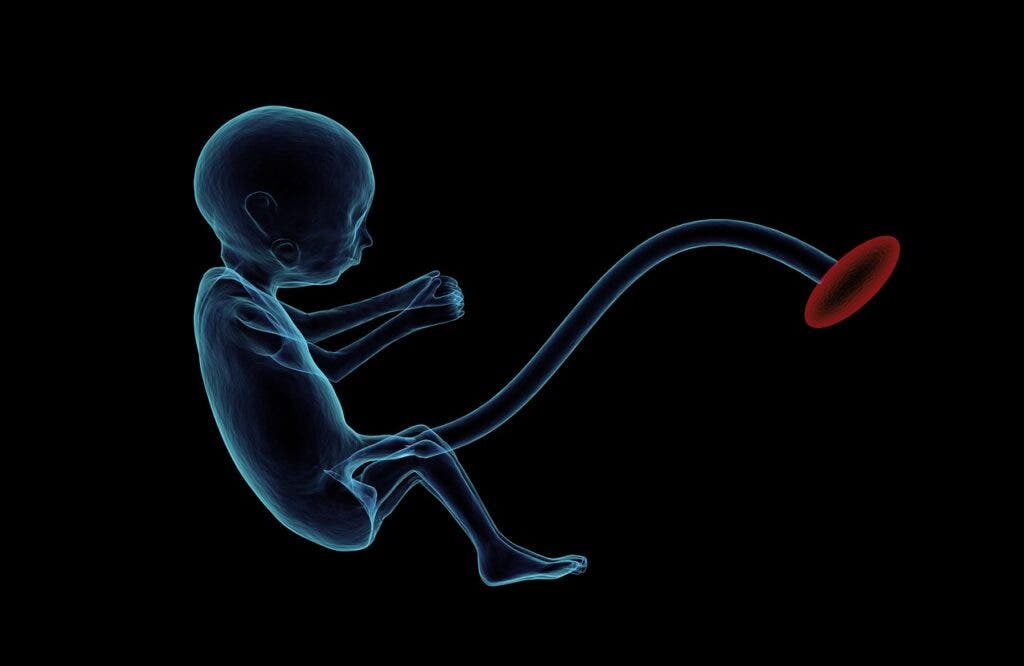
An artificial womb is a device designed to gestate a fetus to term outside of the body. Therefore, the presence of a fetal center and umbilical string to back up circulation are prerequisites — and one time these are met the infant can be transferred from a natural uterus to the bogus uterus, a sort of pre-birth. As over 800,000 babies worldwide are born every year earlier 28 weeks of age, the main discussion around fractional ectogenesis has focused on its potential benefit in increasing the survival charge per unit of extremely premature babies.
Issues begin when a premature baby is transferred to an air-based neonatal unit to support their heart and lung development. This is because exposure to air can atomic number 82 to many complications as the lungs are not yet fully developed. With fractional ectogenesis, premature babies would be transferred to an artificial womb containing synthesized amniotic fluid waiting in the delivery room. Importantly, this ensures that the baby'south lungs remain filled with fluid whilst their umbilical string is attached to an bogus placenta to improve their organ evolution, easing the transition to newborn life.
Regarding vital transportation of oxygen and nutrients to the fetus, this takes place via the natural umbilical cord connected to an artificial placenta. Presently, the nearly common method for the oxygenation and removal of carbon dioxide from a fetus is extracorporeal membrane oxygenation (ECMO), a well-known apparatus for pumping blood and oxygen around the body for long periods. Most recently this technique successfully kept goat fetuses live for up to 237 hours in amniotic tanks.
Theoretically, an artificial womb would provide the fetus with an environment gratis of disease, pollutants, alcohol, or drugs sometimes plant in the homo circulatory system. Equally a consequence, these desirable atmospheric condition may provide fewer hurdles for the babe to gestate to term, hopefully dramatically raising survival rates.
Why at that place is an urgent need for ectogenesis
Pregnancy is a potentially life-threatening condition where women are at chance of suffering catastrophic injuries or even death during childbirth. Ergo, a solution is desperately needed to avert injuries sustained during childbirth in developed and underdeveloped economies across the globe. Indeed, even in loftier-income countries, somewhere betwixt 50–80% of women endure injuries during childbirth. These include anything from musculus tears, lifelong incontinence, holes in organs to breaking the pelvic bones. In fact, the list of means in which the pelvis and reproductive organs can be damaged during this process is practically countless.
Furthermore, from 1998 to 2009 the rate of severe labor complications increased by 75% during commitment and 114% during postpartum hospital stays according to a 2012 study – these 'severe complications' included center attacks, kidney failure, and aneurysms. To add together to these disturbing statistics, according to an interview series from Mother Jones' Senior editor Kiera Butler, information technology's unlikely the medical team will discuss the long-term problems a significant adult female may face after giving nascence — women are often kept in the night. Butler also plant that the bulk of women feel that childbirth classes gloss over many hazards, as do many popular pregnancy books with countless doctors refusing to fifty-fifty screen for astringent childbirth injuries citing the rarity of the status.
In general, women find childbirth traumatic as well as invasive leading to post-natal PTSD in many cases. In that location are as well recorded instances where childbirth has induced PTSD continued to past traumas and/or abuse with these women more likely to suffer postnatal depression or psychosis, a condition that can atomic number 82 to suicide and/or infanticide in the well-nigh astringent cases. Unfortunately, perinatal depression and/or psychosis can too be experienced during pregnancy due to hormone imbalances. Therefore, inquiry into whether catastrophe the pregnancy before to transfer the fetus to an artificial womb could avoid the aforementioned syndromes would be profoundly received and provide a possible end to postnatal low.
Equally it stands there are too many dangers to the mother and infant in natural gestation. Examples of cases in which prematurely ending a unsafe pregnancy are considered necessary include placental abruption, severe traumatic injury, preeclampsia, chronic hypertension, diabetes, unmanaged uterine infection, significant fetal compromise, maternal cancer, or fetal growth restriction. Combined, these complications in pregnancy are not uncommon, meaning the induced ending or termination of a pregnancy to manage them is also non uncommon.
These chronic weather condition during pregnancy tin as well lead to miscarriages, a gene affecting xv-20 per centum of all pregnancies worldwide – consequently, this is where the matter of viability comes in. To explain, the border of viability is the likelihood of keeping premature babies alive – currently standing at 23-24 weeks gestation. Every bit an example, to the UK National Health Service, a baby built-in dead at 24 weeks is classed as a stillbirth, whereas a deceased baby born at 23 weeks and vi days is a miscarriage. This is because anything earlier 24 weeks is not viewed as feasible, i.e. the fetus or embryo is unlikely to survive.
In developed countries with a solid infrastructure, there is a 24% run a risk of keeping a baby born at 23 weeks alive. But 87% of those who make information technology volition experience complications, such equally lung disease, bowel problems, brain harm, and blindness. And although more extremely premature babies are surviving in wealthier countries, the number growing up with chronic conditions has too increased dramatically. Disturbingly, preterm birth is now the greatest cause of death and disability among children under five in the developed world, despite supposed leaps in perinatal care.
How bogus wombs can assist
Future developments may allow ameliorate prediction of those infants who are destined for extreme premature delivery. Therefore, an option where high-chance pregnancies or live births before 37 weeks could be transferred to an environment where they could carry on gestating would obviously be advantageous.
What can be determined here is that the master purpose of the artificial womb is to back up the gestation and organ development of an infant born prematurely earlier 37 weeks of age in an artificial liquid-based environment. This is highly preferable every bit opposed to a neonatal unit of measurement where there is still a high rate of morbidity.
Thankfully, the latest incarnation of the artificial womb known as the Philadelphia biobag appears to have sidestepped the complications experienced in neonatal care to successfully gestate fetuses ex utero that have been removed from their mother at 22–24 weeks gestation in human terms.
Ethical considerations get-go to enter the fray when we consider social finish economical disparities. It'due south unlikely that significant women in communal health systems will be routinely offered ex utero gestation, even when they do have a valid medical reason. Meanwhile, in private facilities where artificial wombs could become a normal part of the reproductive process, causing unnecessary take a chance to the fetus during transfer to the artificial womb. Although there is no way to predict the severity of injuries during childbirth, women over 35 years of age should automatically present a strong case for fractional ectogenesis.
As well equally extended infant development, partial ectogenesis could also help enable fetal surgery at an earlier stage of gestation instead of waiting until after birth. Another possibility involves scientists growing man organs in chimeric beast systems to solve organ shortages for people needing transplants. A danger here would be the harvesting of infant organs grown in unregistered artificial wombs in illegal factories. This sad prediction is based on the dreadful current reality that the trafficking of human organs reaps in $1.5 billion a year. Certainly, this is a real business as trafficked organs now account for 10% of all transplants globally.
A timeline of fractional and full ectogenesis
1932-1955: Without a dubiousness, an honorable mention must go to Aldous Huxley, who first came up with the concept of full ectogenesis and artificial wombs in his dystopian novel "Brave New World" published in 1932. But it wasn't until the 15th of Nov 1955 that a patent roofing the artificial womb was granted to Dr. Emanuel One thousand. Greenberg who besides wrote numerous papers on the subject. Greenberg's design consisted of a tank filled with amniotic fluid where the theoretical fetus tin can gestate, and a machine connected to the natural umbilical string, blood pumps, an bogus kidney, and a water heater. Much of Greenberg'south original design is used as a basis for modernistic-twenty-four hour period systems, with important tweaks.
1996: Many papers were then written on full and partial ectogenesis until 1996 when Juntendo University brought the bogus womb into reality. Their arrangement gestated fourteen goat fetuses that were and so placed into bogus amniotic fluid under the same weather equally a mother goat. The team succeeded in keeping the caprine animal fetuses in the system for three weeks.
2002: Fast-forward to 2002, piece of work begins on full ectogenesis. Tissue samples from cultured endometrial cells removed from a man donor are shaped into a natural uterus where man embryos are implanted by Weill Cornell bioengineers. The embryos were correctly implanted into the artificial uterus' lining and started to grow. However, the experiments were halted after 6 days due to a law preventing human embryos from beingness kept in artificial wombs longer than xiv days. This rule has been codification in twelve countries.
2016: In line with these rules, researchers at Cambridge University gestated a human embryo outside the body for thirteen days using diverse nutrients to mimic conditions in the womb. The research was only terminated due to the constabulary limiting human embryo research to xiv days after fertilization. In other words, ethics rather than engineering science are now the limiting cistron.
Circling back to fractional ectogenesis, we see (WIRF) in Western Australia begin work on their Ex-Vivo Uterine Environment or EVE therapy in 2013. During an interview with The Guardian in 2020, the research team verified that the lamb fetuses gestated in EVE were between 21 and 23 weeks former in human terms. No one else has ever reported working with fetuses this young, although the team only kept their subjects live for a week.
2017:Major inroads in partial ectogenesis were made in 2017 with the most viable artificial womb organization withal. Researchers at the Children's Hospital of Philadelphia (CHOP) successfully gestated fetal lambs in a plastic bag filled with synthetic amniotic fluid dubbed 'the bio-pocketbook'. The bio-bag housed lambs that had been transferred from the ewe'southward womb at 110 days, corresponding to 22–24 weeks for humans. The simple pattern consisted of 3 main components: a pumpless arteriovenous excursion, a airtight sterile fluid surround, and umbilical vascular admission.
The vascular admission saw the actual umbilical cord of the lambs attached to a automobile exterior of the bag. It is in this way the artificial placenta provided oxygen and nutrients to the fetuses while removing waste. The premature lambs were then left in their respective bio-bags to develop in a warm nighttime room to sounds of the mother's center. As a effect, the lamb fetuses reached all major milestones including the opening of eyes and growth of a wool coat. Afterwards which the lambs had matured enough to allow their lungs to fully develop, enabling their 'birth' and first breaths of air.
CHOP states their device will accept many features that should allow the parent to connect with the fetus going mode beyond ultrasound. The planned interactive experience will involve real-time visualization of the fetus within its darkened environment and the ability to play maternal heart and abdominal sounds. Providing an immersive ex-utero reproductive system for both parent and child.
Present-twenty-four hours: The virtually recent ectogenetic projects include work researchers at Eindhoven University of Technology who've been developing an artificial womb since 2016. Their artificial womb and placenta aim to provide a natural environment for the baby to ease the transition to newborn life. In 2019 this consortium was granted a subsidy of 3 million euros, with a second grant of ten million euros currently in progress.
Work relating to full ectogenesis is still ongoing with two papers recently published in the Nature journal. The studies written report the out-of-trunk generation of human blastocysts, the crucial stage the human embryo reaches approximately v to half dozen days subsequently fertilization right before it implants into the uterus. This was achieved past differentiating non-embryonic cells into blastoids or blastocyst-similar cells. In one written report, scientists treated stalk cells with specific growth factors to generate the blastoids. In a second study, adult skin cells were reprogrammed into blastoids.
Researchers at the Weizmann Institute of Science have besides reportedly gestated mouse embryos ex-utero into fetuses with fully formed organs. They accomplished this by implanting mouse blastocysts into an bogus placenta that contained special media and gases to study organ development. The resultant mouse embryos were salubrious until day xi before dying, maintaining viable gestation for almost halfway through the animals' normal twenty-24-hour interval gestation. These results have led many specialists to believe that it's simply a matter of time before this engineering science generates healthy newborn pups.
To surmise, what these studies are telling us is that trials in total ectogenesis are extending the fourth dimension embryos can survive to develop outside of the body, and the transfer and development of fetuses in artificial wombs are pushing back the window of viability for the survival of premature infants. Look these two crucial points to meet within the next ii decades.
What are the disadvantages of an artificial womb?
There is much contention around the socio-ethical connotations of partial ectogenesis. What has already been posited is that based on the timeline of pre-existing reproductive technologies, it is probable to be expensive and restricted to highly equipped neonatal intensive care units.
Certainly, at the inception of this science global disparities in health outcomes for meaning people and infants are in danger of being increased, every bit is racial inequality inside the wealthiest nations. For instance, 94 per centum of all maternal deaths occur in low and lower-middle-income countries according to the WHO. So is it realistic to expect prospective parents in these regions to be offered partial ectogenesis?
The respond to the preceding question is a resounding 'no' – surely this technology would mean universal coverage for reproductive, maternal, and newborn healthcare will finally be addressed. For this reason, equal treat all should exist key to the development of partial ectogenesis. Particularly in those regions suffering high maternal expiry rates and/or race-based discrepancies.
Some other important disadvantage is that a fetus would not have the advantage of antibodies transferred from its mother until it started breastfeeding. Likewise, vaginal flora likely contributes to the health of an infant. However, this is the same country of diplomacy for cesarean section and possibly a necessary exchange where a pregnancy has been deemed dangerous. There could also be other issues related to nutrition, pulsatile claret catamenia, and hormones regulated by the native placenta that may exist incommunicable to simulate in an artificial environment. Moreover, at that place are concerns from the scientific community that children who develop in an artificial womb may lack some essential bond with their mothers that other children have. This could be counteracted past the use of immersive tools CHOP is at present designing for its organization. Offering an even stronger bond between both parents and the infant dependent on this engineering science evolving.
In Aldous Huxley'due south vision, we see a dystopian society that engineered ex utero humans in massive reproductive factories. It'south highly feasible this could well go a reality equally blastoids are already being generated in transparent vessels. Comparably, the utilize of artificial wombs could give rise to engineered humans that nobody feels any responsibility toward whilst watching the product of genetic editing in real-time. At that place is a danger these made-to-guild embryos could exist the initiation of baby factories for expensive adoptive transactions.
As renowned philosopher Professor Julien Murphy notes, women who are smokers, drug users, or coincidental drinkers and practice not wish to alter their behavior could also do good from ectogenesis. Still, the author feels this throws up questions equally to how parents with addictions volition handle child-rearing one time the child is born. Yes, this is a deconstructed egalitarianism where both parents are free to live a hedonistic, self-abusive lifestyle whilst their child is gestating. But how tin this be viewed as an advantage where the child is endangered by the very aforementioned parental behaviors once they emerge from the bogus device? Will their parents suddenly give up their substance corruption in one case their kid is delivered into their arms?
Farther, should prospective parents living unhealthy lifestyles exist asked to sign legal documents which require them to requite upward their children once they are removed from their bodies and transferred to artificial wombs? And what would institute an 'unhealthy lifestyle' as we become more than wellness aware equally a gild? Could nosotros see serious breaches of human being rights here with children becoming a ward of the land due to overreaching wellness scales and regulations that parentshoped-for must follow? Due to the current state of childcare services worldwide, will this even be possible to police? Information technology goes without maxim that childcare services and police force protective services for children need to be overhauled and improved earlier this technology arrives in our hospitals.
How the bogus womb could usher in a new age of gender equality
There are many positive bounds regarding the artificial womb and gender parity with most experts in agreement that this eventuality could herald the era of true equality betwixt all sexual denominations. Crucial to this, ectogenesis is also defended because it would promote equality among fertile, infertile, lesbian, and transgender women.
Firstly, women'due south central role in producing children condemns them to a less competitive place in the labor market, fewer career advancements, less remuneration, and difficulty accessing certain professions.
And then there can be no dubiousness that both fractional and full ectogenesis will promote full equality betwixt male person and female workers. Still, how will employers view the natural full-term gestation of a fetus where partial ectogenesis is an bachelor pick?
The 2nd point focuses on ectogenesis enabling women to take children who are unable to reproduce for social or biological reasons. Primarily, the production of a genetically related child for infertile women, and fertile or infertile men, would rely on the evolution of full ectogenesis. All the same, even where partial ectogenesis gives rise to unrelated offspring this would greatly equalize reproductive capacities in nonbinary groups. Indeed, even single men or gay men could become parents without the demand of a female partner, overseeing and coordinating the immersive gestation experience of their offspring to term themselves.
What's more, this socio-politico perspective allows for the elimination of several life-changing risks and burdens associated with pregnancy and childbirth — as well as some of the unfair distribution of childrearing responsibilities betwixt men and women. Ectogenesis besides promises to make the metamorphosis of the transgender female replete. In a possible devolution of the feminist principle, transgender women volition exist given the choice of settling into their traditional role of motherhood and keeping house. A step back to leap forward information technology would seem.
Another reality the artificial womb may bring about is the inception of the ex-utero 'fourth trimester' where infants are gestated for 12 months instead of just nine. Already dreaded by many new parents effectually the world, the quaternary trimester is the period where a newborn infant is in a sensory overload of sights, sounds, and smells. As well as a frequently colder surroundings where they're not constantly supported by the protective amniotic fluid.
This notoriously hard period after nativity could be concluded by an bogus womb lengthening the gestation and development of the fetus to a year – providing a far more robust baby and fewer sleepless nights for parents. The end of the traditional 4th trimester could also make information technology easier to share childcare uniformly betwixt parents as a 3-month-one-time 'newborn' could make this job a lot less stressful. Chiefly it could also assist in the handling of infants set to be born with defects or ailments. Hither the luxury of an extended gestation could afford a greater risk of recovery from surgery or drug regimes administered in a transparent artificial womb.
Finally, full ectogenesis could also end the practice of surrogacy and its related legal complications and navigated relationships with the pregnant individual. For some prospective parents, an culling to surrogacy gifting more than control over the process of gestation may prove preferable. To stress, this may not work and then well with fractional ectogenesis denoting the transfer of the fetus from the uterus of the surrogate at an early stage of pregnancy. Could this even be justified?
The moral and philosophical implications of the artificial womb?
The development of the bogus womb raises a multitude of bioethical and legal considerations along with serious implications for the ongoing abortion contend. Owing to the fact fractional ectogenesis could expand the range of fetal viability, questions have been raised as to the possible office information technology volition play inside abortion police. As a consequence, the legal definition of the termination of pregnancy may be redefined in one case the fetus is transferred from the host to an bogus womb.
The transference contend may likewise crusade farther problems as the fetal window of viability increases with improved technology – where the border moves from 24- down to 19 weeks, for instance. This increased window of viability, where the fetus can be transferred to an artificial womb at an earlier stage of evolution than the latest stage immune for the termination of pregnancy, may also be deemed criminal depending on the ballgame laws in the region. This increased window of viability in all likelihood will change abortion law, protecting the embryo and fetus at an fifty-fifty earlier stage of pregnancy.
In that event, women could exist required to provide legal justification for their decision to opt for artificial gestation. Examples may include a dangerous pregnancy or astringent injury risk during childbirth – although it is unlikely that the fetal transference would exist legally sound based on a curt-term health risk to a woman. Maybe pregnant any long-term risks must be proven before the pregnancy is terminated and the fetus transferred to the bogus womb; this will non be an easy task.
Some other ethical dilemma posed by the ectogenetic future is a case scenario where fetuses aborted by mothers are then rescued and adopted. In that reality, some women might seek out dangerous backstreet abortions rather than using a legal transference to requite their child up for adoption. Information technology's no wonder that whether artificial wombs should be allowed to influence the pro-choice motion is already under debate with ex-utero gestation and its product already prepare to become a thing for criminal law.
Ectogenesis may as well enhance economic inequality – where wealthy prospective parents may opt to pay for artificial wombs – while the less financially secure volition rely on women to gestate their babies. Existing disparities in nutrition and exposure to pathogens between pregnancies across socio-economical divides may as well exist intensified – raising the result of distribution of access. For example, will artificial wombs receive government funding? If it does, how should the subsidies be distributed? In one case over again, volition at that place be a threshold or health regulations the parent or parents must come across?
The potential for serious human rights breaches is once once again regurgitated from the mouth of this purported liberating technology.
Conclusion
To conclude, full ectogenesis will likely not be for decades, just artificial wombs (and partial ectogenesis) are coming up fast. We need to ensure that, when they exercise arrive, we're prepare — and social club values women for more than but their reproductive chapters. Moreover, authorities should ensure that this technology benefits people who tin can't get pregnant for biological rather than psycho-addictive reasons.
According to Manchester University, fractional ectogenesis may exist fix for human being testing in the next five-10 years. In that upshot, it is vital to consider its implications in advance of its development – this ways broader social and policy considerations are needed for their use in not-emergency situations. Common sense dictates that information technology will be easier to defend using artificial wombs in emergencies, such as saving the lives of premature fetuses or, ane would hope, the person who is pregnant.
For case, documented testify indicates women from minority groups are at a much higher risk of experiencing serious complications or fatalities during gestation and childbirth. This engineering science could greatly meliorate survival rates in these ecological niches, helping to close health disparities, providing social emancipation. To enable this, it is essential that ectogenesis is distributed evenly amid people from disadvantaged backgrounds and/or those with disabilities.
Now, studies on full ectogenesis are pushing forward the fourth dimension in which ova can be grown into embryos and sustained in vitro – while enquiry into not-humans gestating in artificial wombs is pushing dorsum the window of viability for premature fetuses. Thus, equally nosotros get ameliorate at extending the lives of embryos outside the womb, and keeping ever more than premature babies alive, there will come a time when those two points run across and total ectogenesis is born. It is therefore imperative to collate and ramp up the discussion around this burgeoning field of science. This is because the obstacles will be legal and ethical, not technological.
While this may sound futuristic, many technologies that seemed revolutionary a few years ago are now pretty mutual. Expect at IVF – it was one time dystopian science fiction, so an ethical minefield, and so the cutting edge of assisted reproduction – now, IVF is a normal role of reproductive handling.
So once bags and tubes can replace a womb, pregnancy and birth can be redefined. In that, if gestation no longer has to take place inside a woman's body – it will no longer be female. This beautiful event will change the significant of motherhood as genders blur into one, severing our confinement inside a gear up definition. This will be a massive socio-ecological miracle, changing the world irrevocably. It'south up to us to decide if it is for the ameliorate or worse.
mcdonaldruess1936.blogspot.com
Source: https://www.zmescience.com/science/the-artificial-womb-a-fast-approaching-frontier-for-humanity/
0 Response to "What Is the Earliest a Baby Has Survived Outside the Womb"
Post a Comment